" Travel is food for the soul, restores our balance, links us to our global community and allows us to be witness to various cultures,climates,languages and foods. We come to realise our small part in the global nature of our earth,which is part of the greater Universe" Judelle Drake
"The largest of five islands in the archipelago, Nosy Ankao has an interesting history. A transient location for seasonal fisherman, the one small village lost its entire population (of around 10) after they ate turtle meat which was poisoned by seasonal algea. In the 1990's the island was used by 'pirates' as a way to avoid police control on the roads between the Sava and Diana regions of northern Madagascar" .
Names of places on Nosy
Ankao, and what they mean:
It is said that when the island first took
its name, there was no where else in this region with as many Casuarina trees
as here, even though it’s a small island.
Supposedly, the
first people to settle on this island came from here. There was no island here
in the past, only a rock. But the people saw it getting bigger and bigger and
eventually decided to visit. They brought with them any seeds they could find
from the mainland and planted them here. That is why the vegetation/forest is
the same on Nosy Ankoa as it is in Ambanifilaho.
People from all
over the country decided to settle on Nosy Ankao, and this area was set aside
for them, a camp for all people, everyone can meet and live here.
It was a
traditional fishing village before the days of the Ibis seaweed farm.
From the South
House to the southern point of the island, there are special rocks and caves.
When the seas are big, and the waves crash into the rocks, it makes the sound
of canon fire… “a loud boom”.
This sound acts
as warning to fisherman, that the seas are high and they should stay at home.
When digging in
the sands in and around Ampasimangy for tubers, the first inhabitants noticed
they would get itchy. Up to a kilometre into the forest this would occur, but
no where else on the island. They still to this day do not know what causes
this.
Anala
Bozaka
“Forest of
Grass”
There was a
large forest of grass in this area (Elephant grass), which the locals used to
build their houses, instead of the “makut” they use today.
This area was
not a bay when they named it. It was normal coastline. Heavy erosion from the
seas started to occur, leaving petrified trees in the sea. The trees all had
“spikey” branches and so hence the name “spikey”
(another
anecdote was that the first bar on the island was placed here, and everyone who
left it looked “spikey”)
Erosion in
various parts of the island has been occurring since before the Silence family
was here.
Nosy
Benoit
“Benoit’s
Island”
There was man
named Benoit, who did not know how to catch fish with nets. So everyday he
would go to this little island and fish with line. He did this for decades and
the people would see him fishing from there, every single day. Eventually they
told him that it was his island, because he frequented it so often.
He was
apparently very successful as a fisherman because the area was extremely rich and
abundant in sea life.
Nosy
Satrana
“Island of the
Dwarf Fan Palm”
This island was
covered in these palms when the island was named. Nothing else grew here except
for the Dwarf Fan Palm. Now there is not a single one left.
the dwarf fan palm, the fruit of which is used by the
Sakalava in the manufacture of rhum, and the leaves in the manufacture of mats
and baskets; also used for the walls and roofs of houses. The root or part of
it is used as an evil charm. Perhaps a species of Hyphaene[Richardson 1885
The research programme has been monitoring Great White activity and behavioural ecology in False Bay since 2004. Between 2010 and 2016, spotters recorded an average of 205 sightings per year at their operating beaches during the spring and summer period. In 2018 the total number of shark sightings recorded fell to only 50, and this year there has not been a single confirmed Great White sighting by the spotters.
Neither has the Shark Spotters applied research programme detected any of the tagged Great Whites on their tracking receivers since 2017.
This pattern has been mirrored at Seal Island in the middle of False Bay. Shark activity at Seal Island, historically an important feeding ground for Great Whites during the winter period, has plummeted.
The shark cage diving eco-tourism operators, who would normally witness multiple individual sharks visiting their vessels and up to 30 seal predations daily, have not had a single sighting at Seal Island this year.
Further supporting evidence of the absence of these large apex predators is the lack of any feeding or bite marks on the whale carcasses the City has removed from False Bay this year.
Great White sharks, through the eco-tourism and documentary film making sectors, contribute significantly to Cape Town’s local economy. Despite the lack of Great White shark activity, tourism operators have managed to view seven Gill sharks. Gill sharks were previously not present at Seal Island, and this confirms that there are changes happening within the ecosystem.
It is uncertain at this time whether the Great Whites have left False Bay for good, or whether this reduced presence is only short-term.
The City and the Shark Spotters applied research programme will continue to monitor shark activity in False Bay and remain hopeful that the absence of the sharks is a short-term cycle in a larger, long-term ecological pattern.
Despite the disappearance of the sharks from False Bay, the City will still continue with the Shark Spotting Programme at the following popular beaches:
The Fish Hoek shark exclusion barrier will also be deployed for the annual Spring Splash on September 1, over weekends, public holidays, and school holidays during October 2019, and April 2020; and daily from November 1 to March 31, 2020, weather permitting.
Boulders Beach, Simonstown Cape Town See further info below
A tour group was surprised by a particularly unique
experience just off Seal Island, where a pod of killer whales was spotted
hunting down a great white shark.
Rare footage of a tense clash between one of the
greatest predators of the deep and one of the best hunters of the ocean has
locals stunned. The small pod of killer whales was seen cooperating to bring
down a huge great white shark just of the coast of Cape Town.
Guests aboard a tour boat that left from Knysna and
sailed towards Cape Town’s Seal Island in late January, got to watch the show
with one man catching it all on film. Donavan Smith was able to get an amazing
video of the experience and can be heard saying, “This is amazing. This is
special stuff. There’s a big great white here in the water. They come and
they hunt great whites”.
The video shows a number of killer whales circling
the area near the boat in search of a shark and many squeals of surprise and
delight can be heard as the tour group witnesses the majestic mammals in
action.
For a short while the waters become still again
before the light grey “monster” great white shark can be seen as he attempts to
escape the hunt, and is pursued by the killer whales.
Smith can be heard saying, “It’s a shark they are
hunting, they actually bite the tails off from the back,” before the shark is
seen disappearing into the deep. It is unclear what the fate of the shark is.
Killers whales have a reputation in the Cape as
they have been blamed for the absence of great whites in the False Bay area.
Pods of killer whales are known to hunt sharks, with those living in Cape
waters becoming notorious for their predatory behaviour.
The very best treks aren’t just about putting one foot in front of
another—they’re about stepping into a destination’s culture and history.
Still, each of the seven treks included here are no walks in the park.
They’ll challenge you physically and engage you mentally, leaving you
with an indelible impression of the richness of our planet.
1. Peru’s Inca Trail | ~43km | 4 days
Explore ruins in the Sacred Valley and learn about traditional ways of life.Follow
the footpaths of the Inca to the roof of the Andes, passing ancient
Tambo ruins, and breathing in Peru’s pure mountain air by the lungful.
Memorable moments are plentiful on the Inca Trail, but none can compare
to the moment you walk through the Sun Gate and catch your first glimpse
of the forgotten city of Machu Picchu. It’s not just an accomplishment;
it’s a transformative moment. Did you know? When on the trail, some porters sleep with a mirror beneath them in hopes it will deflect spirits coming up through the earth. Best time to go. May to September Get inspired. Explore ruins in the Sacred Valley and learn about traditional ways of life as you take on the Inca Trail to Machu Picchu. Ready to go? More about the Inca Trail
Take on the final 1,200 steps to reach the Lost City of Teyuna.Everyone wants to “get there first”. By trekking Colombia’s Ciudad Perdida
at Teyuna, that honour can finally be yours! Along the way, you’ll
sleep in hammocks strung up in local villages, all the while absorbing
the region’s unique culture. Trek through lush jungles and across
streams before arriving at the ruins of Teyuna. Here you’ll have a have
the rare chance to explore the uncrowded ruins at your leisure and
marvel at what once was. Get here first and you’ll have the Lost City
all to yourself. Did you know? Built by the Tairona civilization ~650 years before Machu Picchu, Ciudad Perdida was home to an estimated 10,000 people during its peak. Best time to go. December to March Get inspired. Enjoy spectacular jungle scenery, swim
in the cool Buritaca River, and take on the final 1,200 steps to reach
the Lost City of Teyuna. Get ‘Lost’ here. More about Colombia
Visit Sherpa villages and meet locals during teahouse stays before arriving at Base Camp.Everest
is more than a mountain and the journey to its base camp is more than
just a trek. Along a route dubbed by some as "the steps to heaven,"
every bend in the trail provides another photo opportunity—beautiful
forests, Sherpa villages, glacial moraines and foothills. This trek will
bring you closer to the people of the Himalayas before opening a window
to the top of the world. After setting eyes on Everest, you won't look
at our planet the same way again. Did you know? Most yaks on the trail are not true yaks, they’re dzo—a
yak-cattle hybrid. Moreover, ‘yak-burgers’ served in guesthouses along
the way are most likely water buffalo. Yaks are just too valuable to the
locals to slaughter for meat. Best time to go. August to November Get inspired. Conquer high passes and glaciers,
visit Sherpa villages and meet locals during teahouse stays before
arriving at Everest Base Camp. Throw open the window to the top of the world. More about Everest Base Camp
Trek through verdant forests and silent glaciers.Ever
stood on the top floor of skyscraper and thought, “Bah, this ain’t so
tall”? Then you might just be Kili material. At 5,895m (19,340 ft), Mt
Kilimanjaro is Africa's highest peak. Follow in the bootprints of some
of the world’s most famed explorers and mountaineers, hiking through
lush rainforests and alpine deserts, across glaciers by day and sleeping
closer to the stars than you ever dreamed possible by night.
Kilimanjaro is no picnic, but unlike other massive peaks, it gives those
daring enough to climb it multiple routes to the top. Choose
wisely—your chances of making your summit a success depend on it! Did you know? Kilimanjaro contains an example of
virtually every ecosystem on earth—glacier, snowfields, deserts, alpine
moorland, savannah, and tropical jungle, all of which found on the
mountain. Best time to go. September to March Get inspired. Trek through verdant forests and silent glaciers before experiencing the curvature of the horizon from Africa's highest peak. Choose your route to the top. More about Mt Kilimanjaro
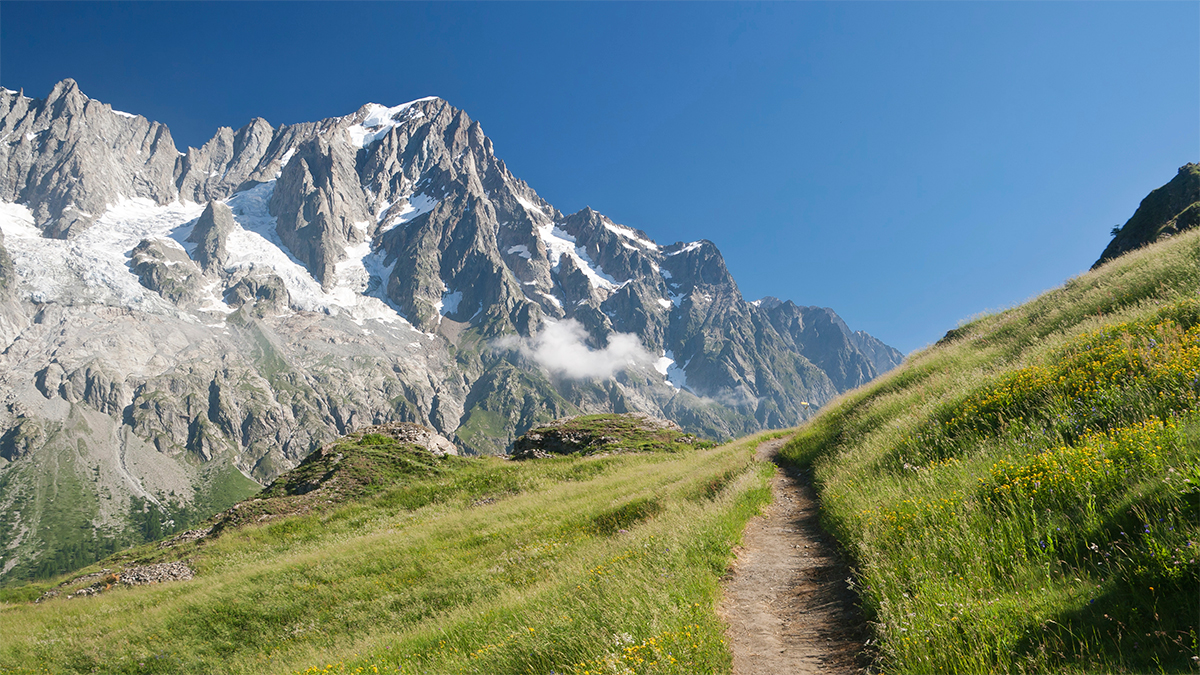
Hike the soul-stirring Mont Blanc massif.The
Tour du Mont Blanc covers more than 100 miles and passes through three
countries: Switzerland, Italy, and France. This challenging hiking
circuit will reward you with mesmerizing views of glaciers, steep
valleys and, of course, Mont Blanc itself. Travel across high passes and
through Alpine meadows, recharging at night with delicious mountain
cuisine in simple refuges. Challenge yourself to conquer one of the
world's premier hiking routes and uncover the alpine heart of Europe. Did you know? In 1990, Swiss climber Pierre-André
Gobet climbed Mont Blanc round-trip from Chamonix in just 5 hours, 10
minutes, and 14 seconds. Best time to go. June to September Get inspired. Hike the soul-stirring Mont Blanc
massif, witness alpine meadows and rocky peaks and conquer windswept
cols and steep trails. Curiosity piqued? Lace up your boots! More about Mont Blanc
6. Patagonia’s Torres del Paine Circuit | 133km | 10 days
Trek through incredibly diverse scenery.You’d
be hard-pressed to identify a part of the world that can top Patagonia
for natural splendour. And once you’ve seen it for yourself, you won’t
even bother to try. The scenery down here at the southern tip of South
America is a photographer’s dream come true: stunning volcanic
landscapes, massive glaciers, sprawling steppe-like plains stretching to
the horizon. Here, your shutter-finger is due for an intensive workout.
Patagonia’s Torres del Paine Circuit brings you to remote,
lesser-visited sections of the National Park and the truly unimaginable
scenery to be found there. Did you know? Before its creation in 1959, the park
was part of a large sheep estancia, and it's still recovering from
nearly a century of overexploitation of its pastures, forests and
wildlife.. Best time to go. December to March Get inspired. Watch the ice floes of the Grey Glacier and trek through incredibly diverse scenery. Ready for the full circuit? More about the Torres del Paine circuit
7. Trekking Venezuela's Mt Roirama | ~34km | 6 days
Conquer the summit of Roraima.Journey
into a land that time forgot and conquer the pre-Cambrian tabletop
summit of Roraima. The stunning mountain is sacred to the region's
indigenous people and is said to have inspired Arthur Conan Doyle’s "The
Lost World." Take time to explore the unique flora and fauna—some of
which is completely unique to the mountain. The trek itself takes six
days start to finish but this two-week adventure also includes canoe
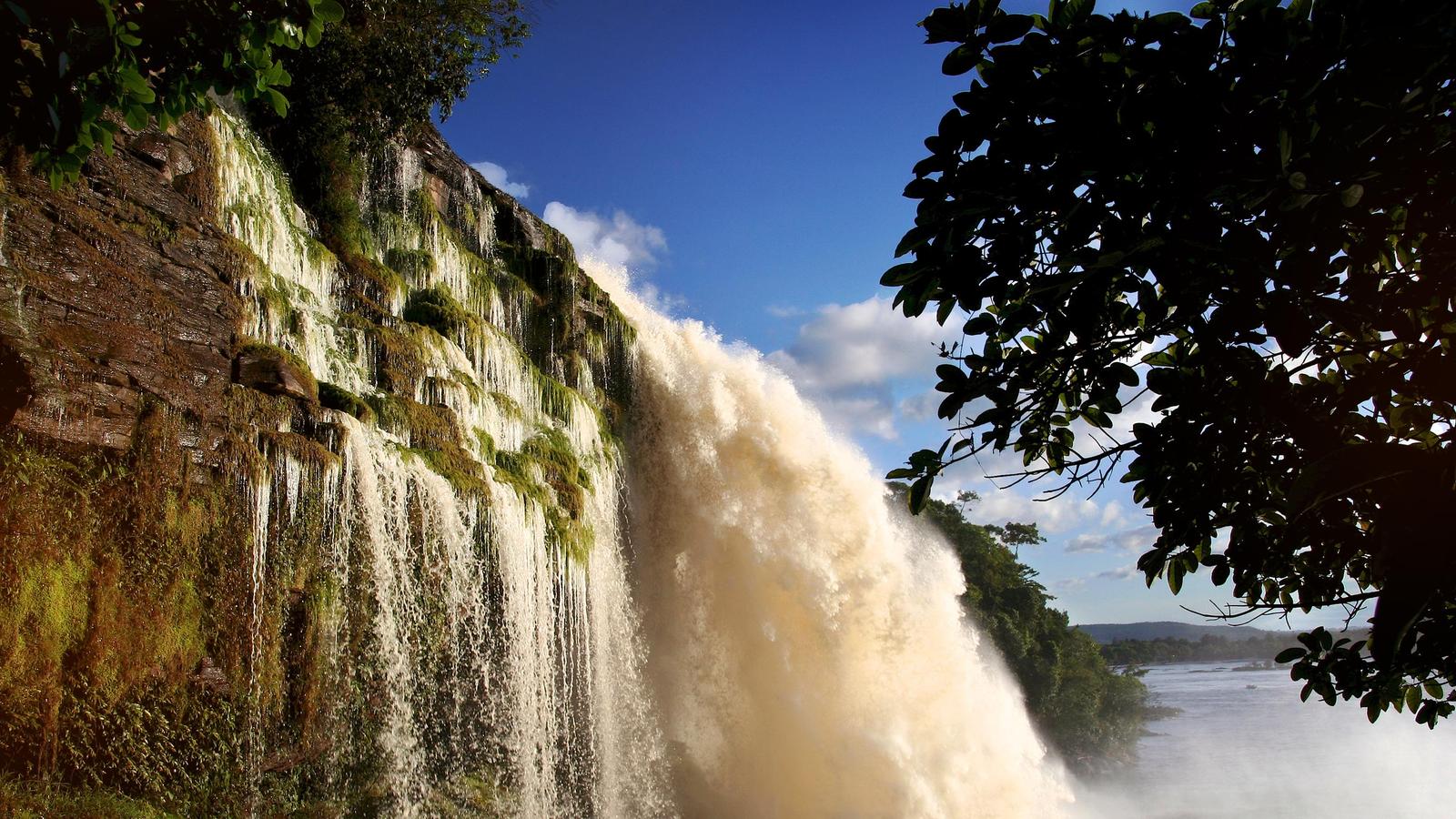
trips in Canaima National Park and a thrilling trek to Angel Falls. If
you're fit and want to get off the beaten track, this adventure will
take you to new heights. Did you know? Despite the sheer cliffs that frame
the plateau, it was the first major tabletop mountain to be climbed.
Author, explorer and botanist Sir Everard im Thurn walked up a forested
ramp in December 1884 to the top of the plateau. This is the same route
hikers take today...
Best time to go. Roraima can be hiked year round;
however, some argue that the best time to go is from November to April
when it’s drier and warmer. Get inspired. Conquer the summit of Roraima, explore
Canaima National Park, witness the power of Angel Falls, discover a
'lost world' amid tabletop mountains.